


Back on Track After Labor Day: Reignite Your Fitness Goals and Push Forward
itLabor Day weekend has a way of loosening the routine.
Maybe there were cookouts, late nights, road trips, desserts, skipped workouts, extra drinks, or a sleep schedule that drifted far from normal. Good. That means you lived it up! We only have 1 life. A long weekend is not a failure. It is a pause.
Now the pause is over.
This is the moment that matters, not because you need to “make up” for anything, but because you get to choose your direction again. One weekend does not erase your progress. A few relaxed days do not define your discipline. What you do next is where your momentum starts to rebuild.
The goal now is simple: get back on track without guilt, without panic, and without trying to punish yourself into progress. You do not need a dramatic reset. You need a clear next step, repeated with confidence.
This is your coaching reminder: start where you are, use what you have, and move forward today.

Let the weekend be part of the plan, not the reason you quit
A common mistake after a holiday weekend is turning a small break into a full stop.
You miss one workout, then think the week is ruined. You eat differently for a few days, then feel like your progress is gone. You step on the scale and let one number decide your mood. That spiral can do more damage than the weekend itself.
Holiday weekends are normal. Birthdays, vacations, family dinners, and celebrations are part of life. A fitness plan that cannot survive regular life is too fragile.
Instead of treating Labor Day as a setback, treat it as feedback.
Ask yourself a few honest questions:
Did I sleep less than usual?
Did I move less than I normally do?
Did I eat foods that made me feel sluggish?
Did I enjoy myself and need structure again?
What habit will help me feel better fastest?
No shame. No drama. Just useful information.
Your body is not asking for punishment. It is asking for rhythm. Hydration, movement, balanced meals, and sleep will do more for you than panic workouts or extreme restriction.
The strongest people are not the ones who never drift. They are the ones who know how to return.
Start with one clean win today
When motivation feels low, do not wait until Monday, next month, or “when life calms down.” Take one clean action today.
Not ten actions. One.
A clean win is small enough to do, but strong enough to shift your mindset. It gives you proof that you are back in motion.
Here are a few examples:
Take a 20-minute walk after dinner.
Drink a full glass of water before your next meal.
Prep a simple protein source for tomorrow.
Do a short strength circuit at home.
Get to bed 30 minutes earlier tonight.
Pack your gym clothes before you sleep.
Stretch for 10 minutes instead of scrolling.
None of these actions are flashy. That is the point. Progress often starts with the unglamorous choice you can repeat.
If you are tempted to go extreme, pause. A two-hour workout after a weekend of low sleep and heavy food may leave you sore, tired, and less likely to train again tomorrow. A solid 30-minute session that restores confidence is often the better move.
The goal is not to prove you are tough. The goal is to prove you are consistent.
You do not need to earn your way back. You only need to step back in.
Use the first workout to rebuild momentum
Your first workout after Labor Day does not need to be your hardest workout of the season. In fact, it probably should not be.
Think of it as a re-entry session.
You are reminding your body how good movement feels. You are reconnecting with your routine. You are showing up, checking in, and building trust with yourself again.
A smart back-on-track workout might look like this:
Warm-up
Strength work
Cardio
Cooldown
5 to 10 minutes of easy walking, light cycling, or dynamic mobility
3 to 5 basic movements such as squats, rows, presses, lunges, or deadlifts
10 to 20 minutes at a pace where you can still speak in short sentences
Gentle stretching, slow breathing, and water
Keep the effort steady. You should finish feeling accomplished, not crushed.
If you lift weights, reduce the load slightly for the first session back. If you run, keep the pace comfortable. If you take fitness classes, choose one that supports your return instead of one that leaves you unable to move for three days.
This approach supports real fitness improvements because it keeps you training beyond the first burst of motivation. Consistency beats the all-or-nothing cycle every time.

Get your food rhythm back without overcorrecting
After a weekend of burgers, snacks, desserts, and drinks, many people swing too far in the other direction. They skip meals, cut carbs, or try to live on salads and coffee.
That usually backfires.
Under-eating can increase cravings, lower energy, and make workouts feel harder than they need to feel. A better plan is to return to balanced meals that make you feel steady.
Start with the basics:
Protein at each meal
Color from fruits or vegetables
A carb source that supports training
Healthy fats in reasonable portions
Enough water across the day
This does not need to be complicated.
Breakfast could be eggs with fruit and toast. Lunch could be a chicken bowl with rice, vegetables, and salsa. Dinner could be salmon, potatoes, and a salad. Snacks could be Greek yogurt, a protein smoothie, cottage cheese, fruit, nuts, or a turkey wrap.
The point is to feed your body like you expect it to perform.
If you feel bloated after the weekend, do not panic. Shifts in sodium, carbohydrates, alcohol, sleep, and meal timing can change how your body feels and looks for a few days. Return to normal habits and give your system time to settle.
A helpful rule for the first few days back is this: build your plate before you judge your progress.
Your body responds well to routine. Give it a routine worth responding to.
Reset your schedule before motivation fades
Motivation is useful, but it is not dependable. Structure is better.
After Labor Day, schedules often get busy again. Work picks up. School routines settle in. Fall events fill the calendar. If your workouts are left to chance, they will be the first thing pushed aside.
So schedule them.
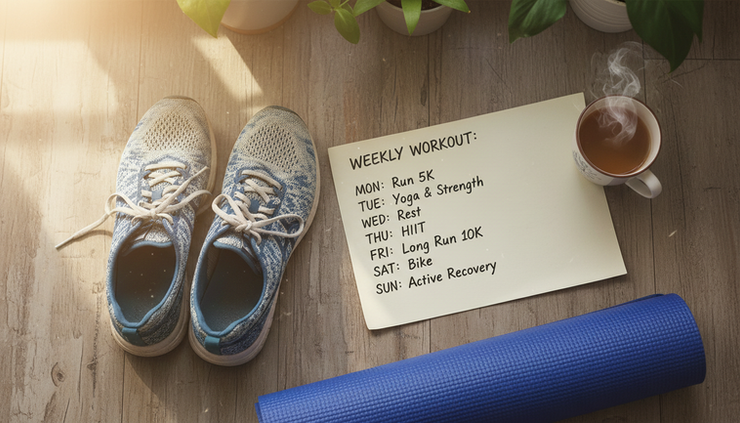
Look at the next seven days and choose your training windows now. Treat them like appointments. Not because fitness should control your life, but because your health deserves a place in it.
Try this simple weekly reset:
Pick three workout days.
Choose the exact time for each session.
Decide what type of workout you will do.
Plan one backup option.
Put it on your calendar.
A backup option matters because life does not always cooperate. If your 45-minute gym session falls apart, do a 20-minute home workout. If your run gets rained out, do a mobility session indoors. If your morning gets chaotic, walk after dinner.
The plan does not need to be perfect. It needs to keep you from quitting when the day changes.
Focus on identity before intensity
There is a powerful shift that happens when you stop asking, “How do I fix this?” and start asking, “What would the version of me who keeps promises do next?”
That version does not need to be perfect. They do not need to love every workout. They do not need to eat clean at every meal. They simply return to the habits that support them.
Identity is built through repeated evidence.
Every time you show up, you cast a vote for the person you are becoming. A walk counts. A healthy breakfast counts. A short session counts. Going to bed instead of staying up for one more episode counts.
This is not about pretending discipline is easy. Some days will feel heavy. Some workouts will feel awkward. Some meals will be messy. That is normal.
Your job is to lower the barrier enough that you can still act.
When you build consistency, intensity has a place. Push hard on the days your body is ready. Challenge yourself. Add weight. Increase pace. Try the harder variation. But do not confuse intensity with commitment.
Commitment is what you do when no one is watching, when the weekend was fun, when the routine slipped, and when you still decide to come back.
Use the fall season as a fresh training block
Labor Day often feels like the unofficial start of fall. That makes it a great time to set a short, focused training block.
Instead of thinking about the rest of the year all at once, think in the next four to six weeks. That window is long enough to build progress and short enough to stay focused.
Choose one main target for this block. Keep it clear.
Examples:
Train three times per week.
Walk 8,000 steps most days.
Build strength in the squat, hinge, push, and pull.
Run a comfortable 5K.
Improve energy by getting consistent sleep.
Cook at home four nights per week.
Stretch or do mobility work after each session.
Pick something that matches your real life. If work is intense, do not build a plan that requires two hours a day. If you are returning after a long break, do not compare your current pace to your peak. If you are already consistent, choose a challenge that stretches you without breaking your rhythm.
Your goals should give direction, not pressure.
A useful question is: “What can I repeat on a normal week?”
That question filters out fantasy plans and brings you back to what works.
Watch your self-talk after a setback
The way you speak to yourself after a break matters.
If your inner voice says, “I blew it,” your next action will feel heavy. If it says, “I know how to restart,” your next action becomes much easier.
You do not need fake positivity. You need honest coaching.
Try replacing harsh thoughts with direct, useful thoughts:
Old thought | Better coaching thought |
“I ruined my progress.” | “A few days changed my rhythm, not my ability.” |
“I have to start over.” | “I am continuing from where I am.” |
“I need to punish myself.” | “I need to take care of myself.” |
“I always fall off.” | “I am practicing the return.” |
“I do not feel motivated.” | “I can act before motivation shows up.” |
Read those again if you need to.
You are not weak for needing a reset. You are human. The skill is not avoiding every detour. The skill is shortening the time between the detour and the return.
That is where confidence grows.
Build the next 24 hours
If the big picture feels overwhelming, shrink the focus.
The next 24 hours can change your direction.
Here is a simple back-on-track day:
Morning
Drink water. Eat a protein-rich breakfast. Get sunlight if you can. Move for five to ten minutes, even if it is just a walk around the block.
Midday
Eat a balanced lunch. Keep caffeine reasonable. Take a short walk or stretch break. Decide when your workout will happen.
Evening
Train, walk, or do mobility work. Eat a satisfying dinner. Prep one thing for tomorrow. Set a bedtime that gives you a real chance to rest.
That is not a perfect day. It is a grounded day. Grounded days stack well.
If you cannot do all of it, do part of it. If you cannot work out, take a walk. If you cannot cook dinner, choose the best available option. If bedtime runs late, set up tomorrow morning to be easier.
The all-or-nothing mindset wants you to quit when the day is not perfect. Coaching mindset says, “Find the next best move.”

Remember why you started
After a holiday weekend, it is easy to focus on the scale, the mirror, or the workouts you missed. Those things may matter to you, but they are not the whole story.
Think about the deeper reasons.
You want more energy. You want to feel strong. You want better stamina for daily life. You want to carry groceries without strain, climb stairs without getting winded, play with your kids, hike with friends, age with strength, or feel at home in your own body.
Those reasons last longer than motivation.
Write one reason down and keep it visible. Put it on your phone lock screen, a sticky note, or the top of your workout plan. When your schedule gets busy, that reminder can bring you back.
Then take the next step, not the perfect step.
Drink the water. Start the warm-up. Pack the lunch. Walk for 15 minutes. Add weight next week. Sleep tonight. Repeat tomorrow.
This is general fitness information, not medical advice. If you have a health condition, injury, or major change in activity level, check with a qualified professional before starting a new program.
Your comeback starts with the next rep
Labor Day weekend is behind you. The rest of your season is still open.
You do not need to regret the food, the rest, the travel, or the fun. You also do not need to stay stuck in vacation mode. You can enjoy the memories and still return to the habits that build the life you want.
Start small today. Train with patience. Eat in a way that supports your energy. Put workouts on the calendar. Speak to yourself like a coach would. Keep your promise, even if the promise is simple.
A strong return does not require a perfect plan. It requires a decision followed by action.
Take the walk. Lift the weight. Prep the meal. Go to bed on time.
Then wake up and do the next right thing.
That is how you get back on track. That is how you push forward.
Do you need more assistance? If so, email me at coachjames56@gmail.com and share how I can assist you.
-Coach James
JHenderson Training & Consulting


Comments